Determination of Hydraulic Conductivity of the Aquifer using Falling head test
Procedure
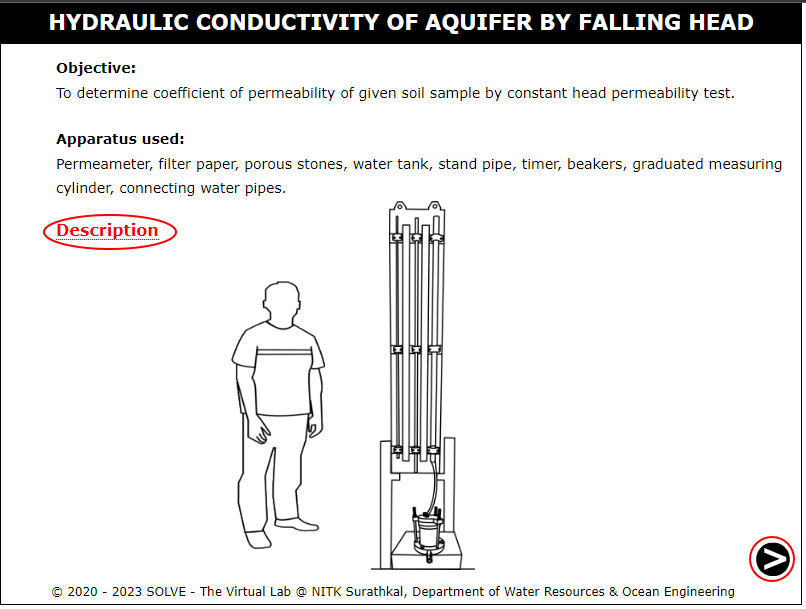
Read the Objectives and Apparatus, hover over the Description and Click on Next.
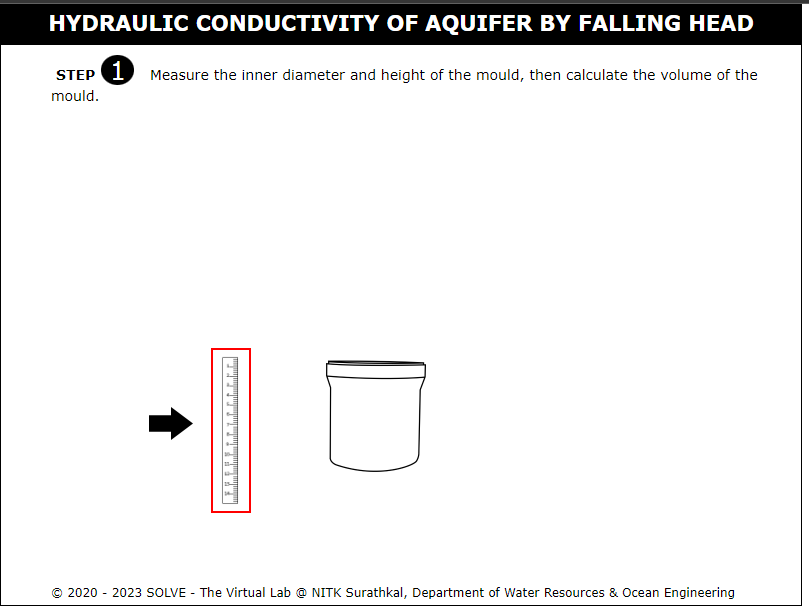
Click on the scale to measure the diameter of the mould and then find the volume of the mould.
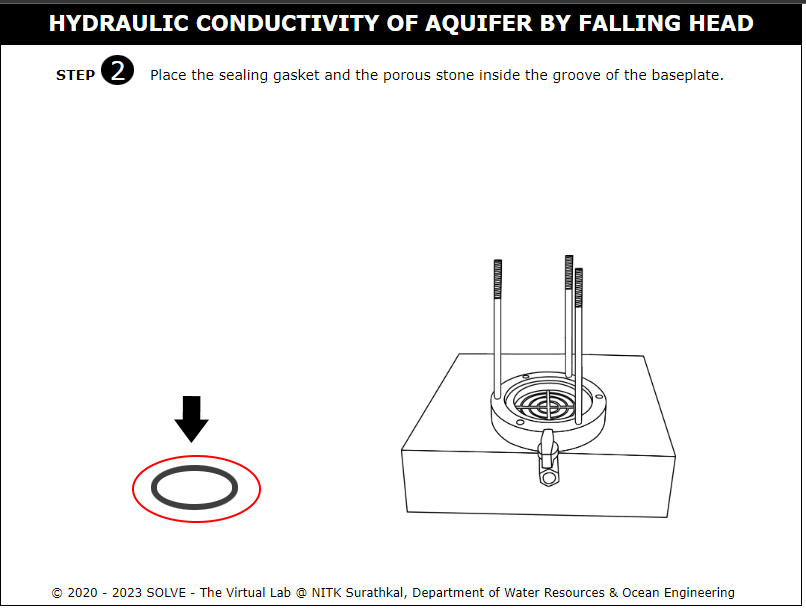
Click on the sealing gasket and then click on the porous stone to place it inside the groove of the baseplate.
Click on the mould to fix it on the base mould using nut and bolt. Click on the filter paper to place it inside the mould.
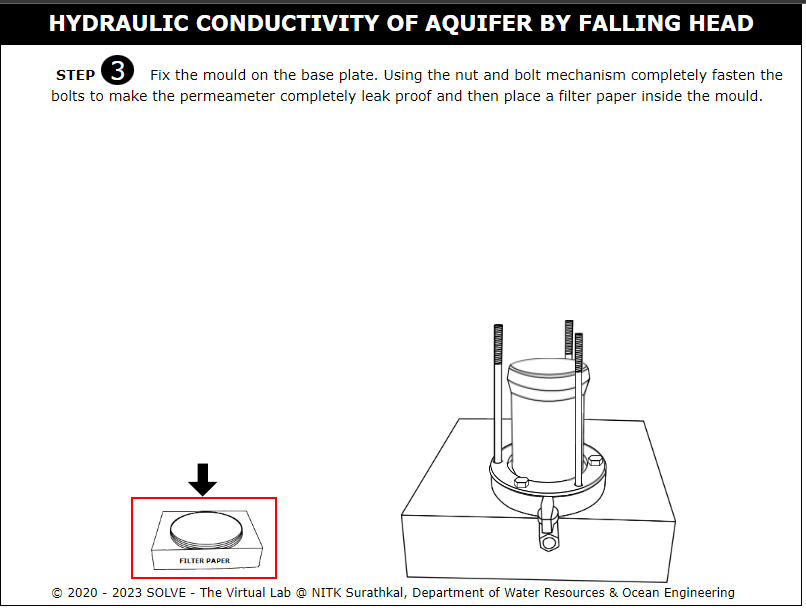
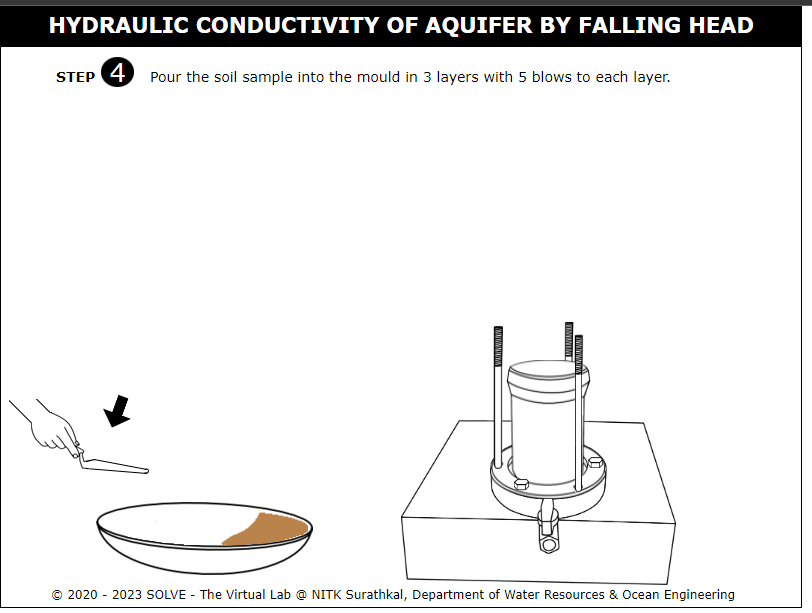
Click on the trowel to pour the soil sample into the mould and then click on the hand with rod.
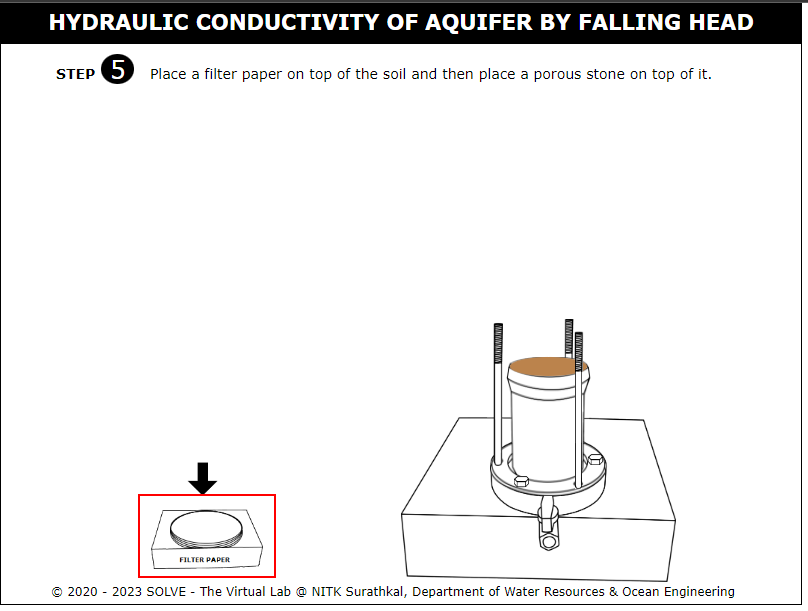
Click on filter paper to place it on top of the soil and then place a porous stone on top of it.
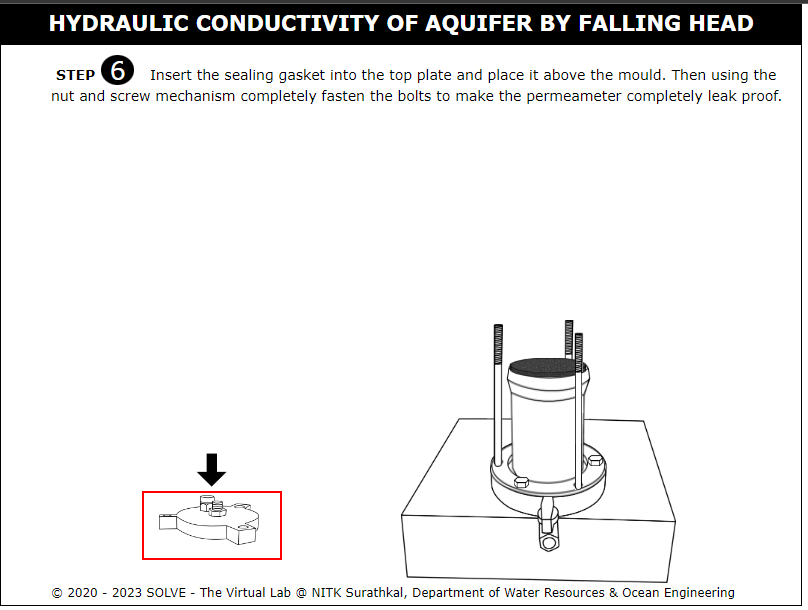
Click on the top plate to place it above the mould and then click on the nut to make the permeameter completely leak proof.
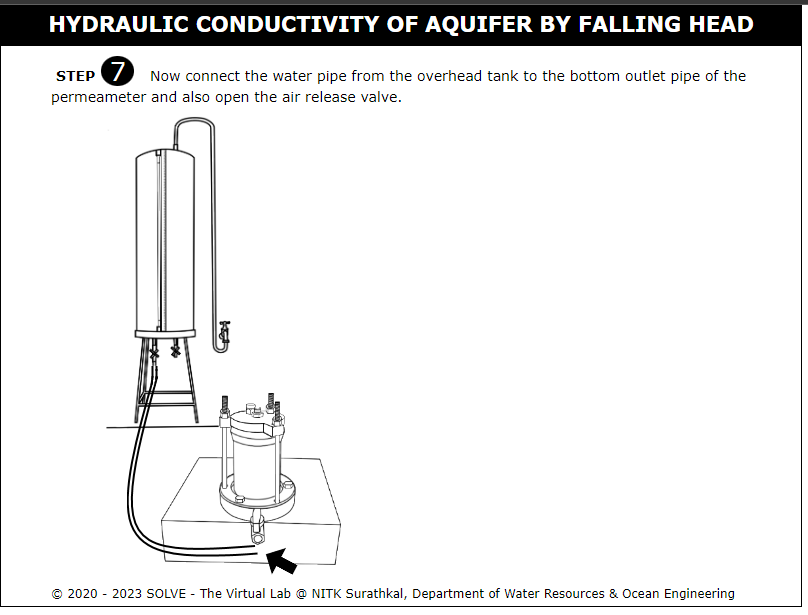
Click on the pipe to connect the water pipe from the overhead tank to the bottom outlet pipe of the permeameter and also open the air release valve.
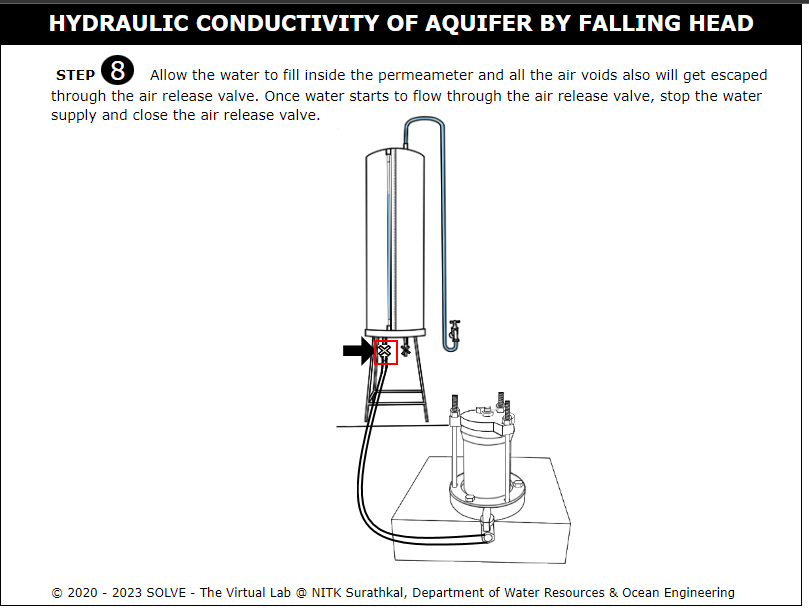
Click on the valve to fill water inside the permeameter and all the air voids also will get escaped through the air release valve. Once water starts to flow through the air release valve, stop the water supply and close the air release valve.
Select the diameter of the pipe.
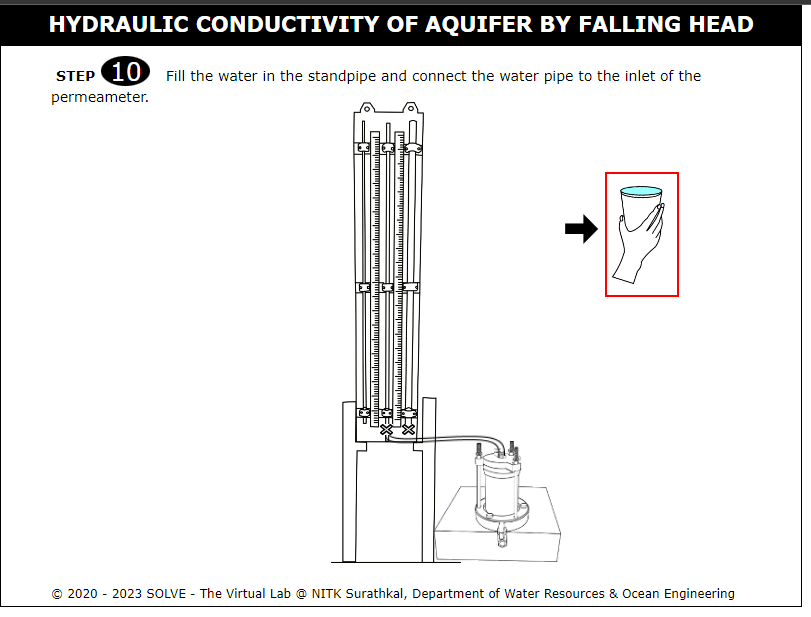
Click on the hand with water to fill water in the standpipe and then click on the valve to allow waterflow through the pipe.
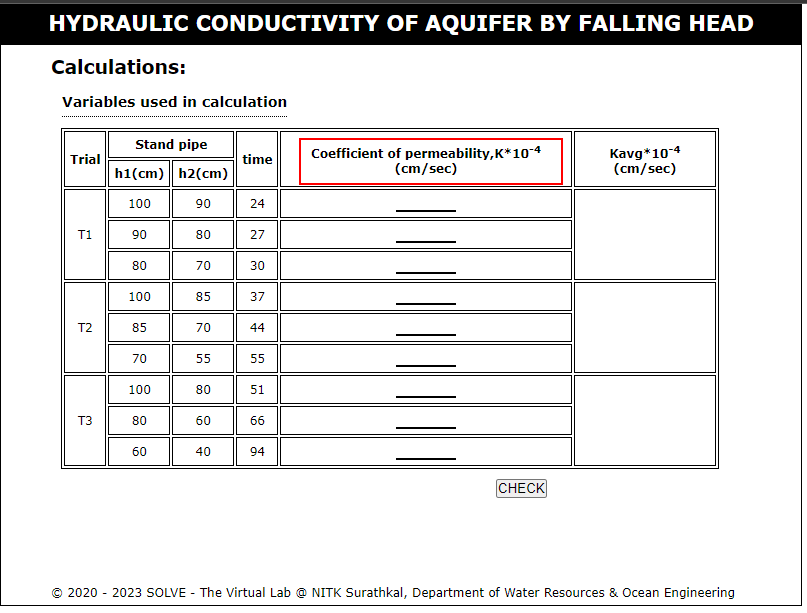
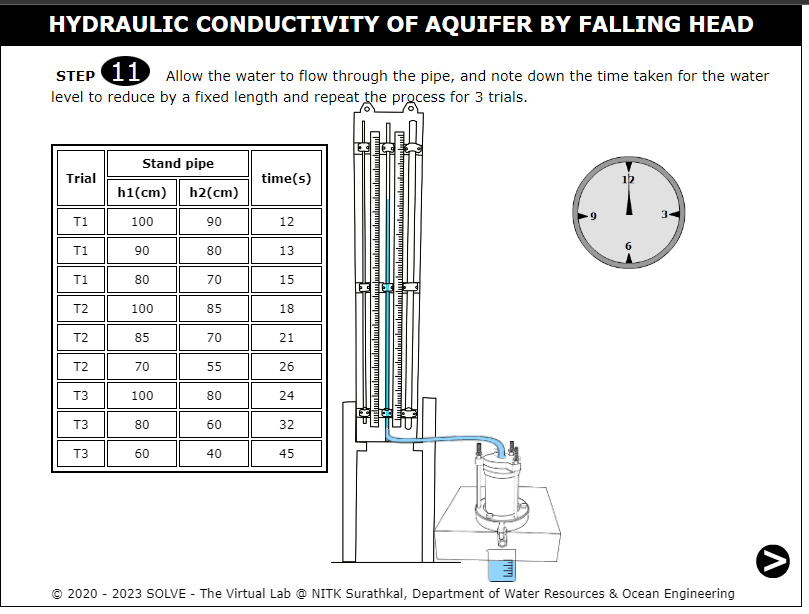
Note down the time taken for the water level to reduce by a fixed length and repeat the process for 3 trials.
Calculate the Coefficient of permeability, K by using the given formula.