
Fraunhofer Diffraction using Single-Slit and Circular Aperture
Light exhibits both wave-like and particle-like properties. One important consequence of its wave nature is diffraction — a phenomenon in which light bends slightly and spreads when it passes around the edges of an object or through a small aperture.
In Fraunhofer diffraction, both the source and the screen are at an infinite distance from the obstacle. As a result, the incident wavefront is plane. Fraunhofer diffraction is a specific type of diffraction that occurs when parallel light waves usually from a very distant source — pass through a narrow slit or diffracting object. The resulting pattern is observed on a screen at a far distance from the aperture, or at the focal plane of a converging lens. This far-field condition for a well-defined and stable diffraction pattern.
Let a parallel beam of monochromatic light of wavelength λ be incident normally upon a narrow slit AB of width d. After passing through the slit, the light gets diffracted and spreads out as shown in Fig. 1. If a converging lens L is placed in the path of the diffracted beam, a real image of the diffraction pattern is formed on the screen SS′ at its focal plane.
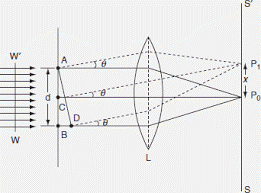
Fig. 1 — Fraunhofer Diffraction through a Single Slit
Path Difference and Phase Difference
The path difference between rays from opposite edges of the slit is:
BD = AB sinθ = d sinθ …(1)
The corresponding phase difference is:
ϕ = (2π / λ) · d sinθ …(2)
Resultant Amplitude
Consider the width AB of the slit divided into n equal parts. Each part acts as an elementary source. The amplitude of vibration at point P₀ due to the wave from each part is the same (a), and the phase difference between waves from any two consecutive parts is:
ϕ' = (1/n) · (2π / λ) d sinθ
The resultant amplitude at P₀ is:
A = a · sin(nϕ'/2) / sin(ϕ'/2) …(3)
Letting α = πd sinθ / λ, the intensity at any point in the diffraction pattern is:
I = I₀ · (sinα / α)² …(4)
where I₀ is the intensity at the central maximum (θ = 0).
Condition for Maxima (Approximation)
θ = 0° (central maximum)
d sinθ ≈ (k + ½)λ for k = 0, 1, 2, 3, … …(5)
| Symbol | Description |
|---|---|
| d | Width of slit |
| θ | Angle of diffraction |
| k | Order of maximum (k = 0, 1, 2, 3, …) |
| λ | Wavelength of light |
Condition for Minima
d sinθ = kλ for k = 1, 2, 3, … …(6)
| Symbol | Description |
|---|---|
| d | Width of slit |
| θ | Angle of diffraction (θ > 0°) |
| k | Order of minimum (k = 1, 2, 3, …) |
| λ | Wavelength of light |
The half-angular width of the central maximum is:
Δθ = arcsin(λ / d) ≈ λ / d (for small angles) …(7)
The intensity of the first secondary maximum is approximately 4.7% of the central maximum, occurring near α = 3π/2.