
Wave Nature of Light with Young’s Double-Slit Experiment
To study Interference phenomenon with the Young's Double Slit Experiment
Step 1: Set some value for D (distance from slits to the screen).
Step 2: Set value for d (distance between the slits).
Step 3: Set value for λ (wavelength) to observe β (fringe width).
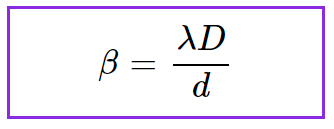
Study the graph to understand fringe width, which is given by:
-
Perform the following experiment
Experiment:
Aim: Verify the wavelength (λt) of the given monochromatic source and find out the percentage error.
Set some value for D (distance from slits to the screen).
Set value of d (distance between the slits).
Set the value of λ or λt (theoretical wavelength).
Measure the value of fringe width (β) from the scale on the screen.
Repeat the experiment 5–6 times; each time calculate the corresponding value of λc using λc = β·d / D.
Obtain the mean calculated value λc.
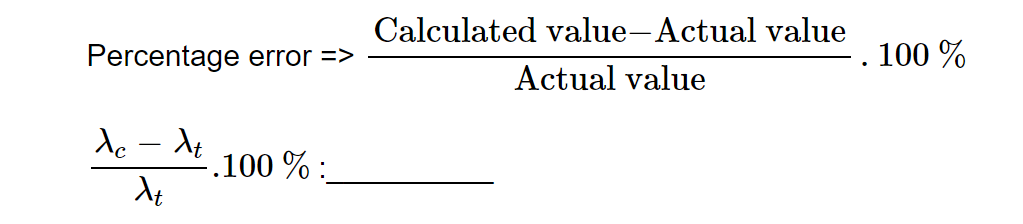
Verify the values of λc and λt, and thereby calculate the percentage error.
Where:
λc = Measured value of wavelength.
λt = Theoretical value of wavelength.
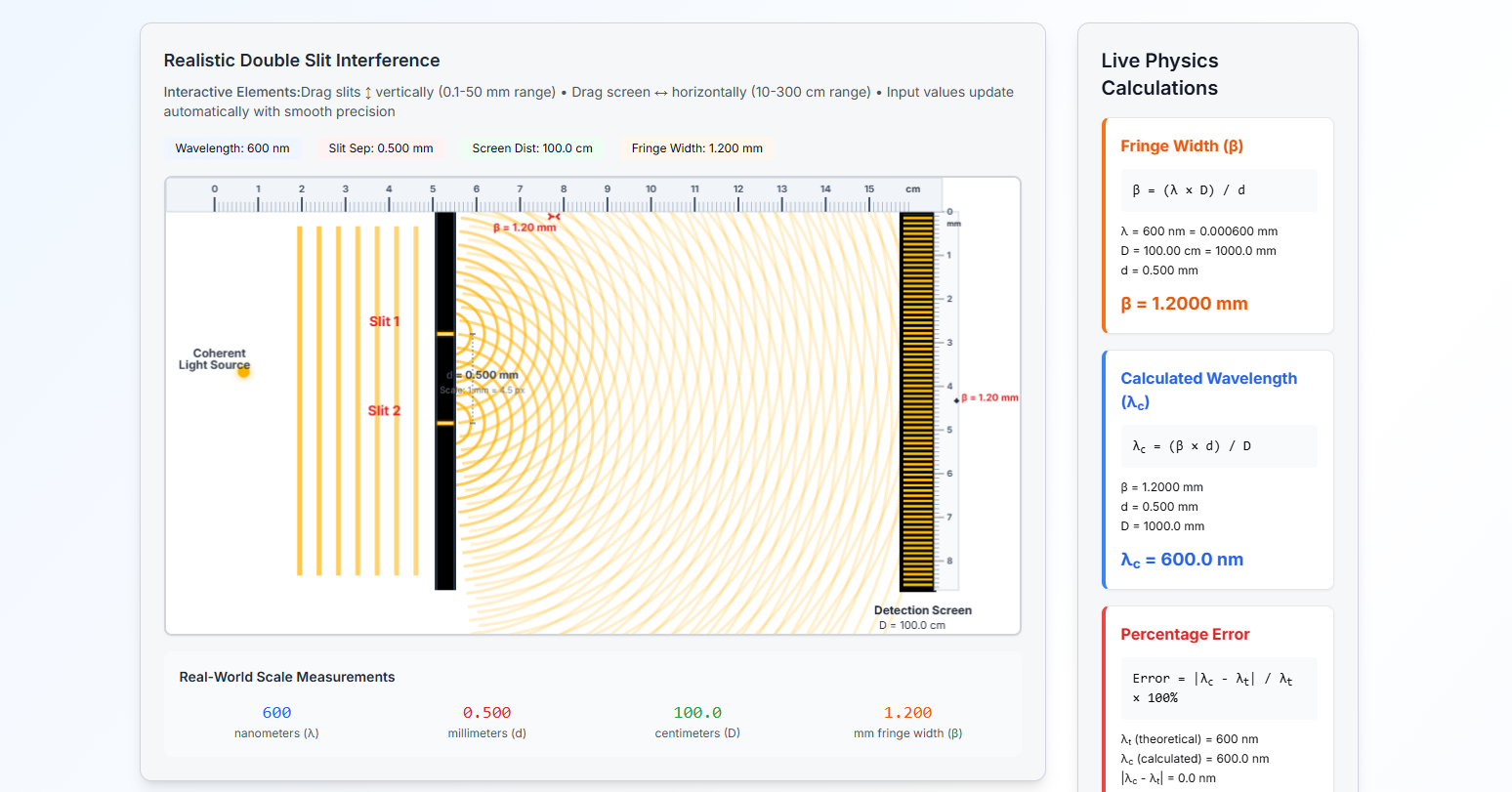
Fig. 4. Young's Double-Slit Interference.
Table 1. Test values for determining the wavelength of light
| S.No | D (distance from slits to screen) |
d (distance between slits) |
𝛽 (fringe width) |
λ c (wavelength) |
|---|---|---|---|---|
| 1. | 1.0 m | 0.50 mm | 1.178 mm | 589 nm |
| 2. | 1.5 m | 0.50 mm | 1.767 mm | 589 nm |
| 3. | 2.0 m | 0.50 mm | 2.356 mm | 589 nm |
| 4. | 1.0 m | 1.00 mm | 0.589 mm | 589 nm |
| 5. | 1.5 m | 1.00 mm | 0.884 mm | 589 nm |
Value of λt taken: 589 nm (Sodium yellow light)
The mean value of λc: 589 nm
-
Result:
λc = 589 nm and Percentage error = 0 %