
Implementation of Packet Switching: Setup, Transmission, and Teardown.
Introduction
Packet switching is a modern communication technique in which data is divided into smaller units called packets, and each packet is sent independently across a network. Unlike circuit switching, which reserves a dedicated path for the whole communication session, packet switching allows multiple devices to share the same communication network efficiently.
Packet switching forms the backbone of the internet, enabling services such as web browsing, emails, social media, video streaming, cloud computing, and instant messaging.
1. What is a Packet?
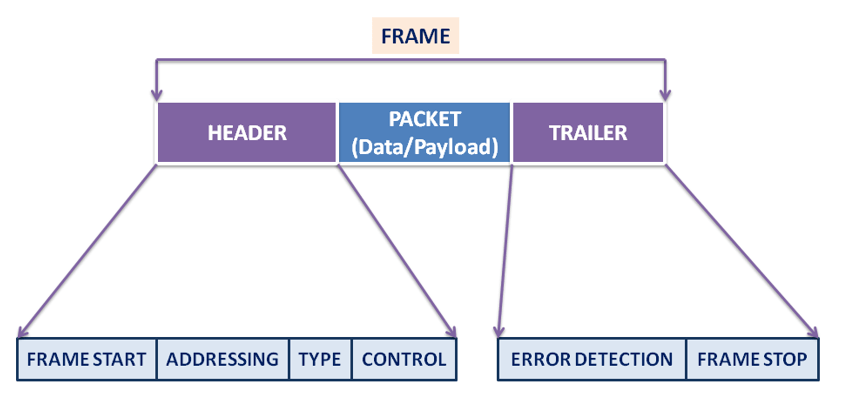
A packet is the smallest unit of data transmitted in a packet-switched network. When a message is sent, it is broken into multiple packets. Each packet contains:
- A portion of the data
- Source and destination addresses
- Sequence numbers
- Error detection information
These components ensure that packets can be routed, checked, and reassembled.
Structure of a Data Packet
2. Working of Packet Switching
2.1 Segmentation of Data
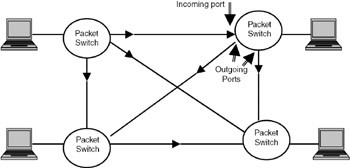
The data to be sent is divided into fixed-size or variable-size packets.
2.2 Independent Transmission
Each packet travels independently. Packets may follow: - The same route - Different routes - Alternate routes during congestion
2.3 Routing at Intermediate Nodes
Routers inspect packet headers and forward them based on routing tables and network conditions.
2.4 Reassembly
Packets arriving at the destination are reassembled using sequence numbers.
2.5 Error Handling
If any packet is lost or corrupted, the system requests retransmission.
Packet Switching Working Diagram
3. Types of Packet Switching
Packet switching is categorized into two types:
3.1 Datagram Packet Switching
Datagram packet switching is a connectionless method where each packet is treated independently and carries its own destination address. Each packet may take a different route through the network depending on traffic and availability.
Characteristics: - No pre-established route - Packets are routed independently - Packets may arrive out of order - Used on the Internet (IP networks)
3.2 Virtual Circuit Packet Switching
Virtual circuit packet switching is a connection-oriented method where a temporary logical path is established between the sender and receiver before data transmission begins.
Characteristics: - A logical route is established beforehand - All packets follow the same route - Packets arrive in order - Used in ATM and Frame Relay networks
4. Characteristics of Packet Switching
- No dedicated physical path
- Efficient resource utilization
- Highly scalable
- Packets may take alternate routes
- Supports bursty data traffic
- Robust against failures
- Dynamic routing decisions
5. Advantages of Packet Switching
- Efficient bandwidth usage
- Fault-tolerant and adaptable
- Supports multiple users simultaneously
- Reliable with error-correction mechanisms
- Scalable to large networks
- Ideal for internet-based services
6. Disadvantages of Packet Switching
- Packets may arrive out of order
- Higher latency under congestion
- Requires complex protocols
- Not ideal for real-time communication without QoS
7. Applications of Packet Switching
Packet switching is used in: - Internet communication - Email transmission - Web browsing - Instant messaging (WhatsApp, Telegram) - Voice over IP (VoIP) - Video conferencing (Zoom, Google Meet) - Cloud computing - Online gaming - File transfer (FTP/SFTP)