DETERMINATION OF THE TRANSMISSIVITY OF AN AQUIFER SOIL
Objective
To determine the transmissivity of a highly permeable soil in an aquifer.
Apparatus used:
Permeameter with its accessories, Standard soil specimen, De-aired water, Balance to weigh up to 1 gm, I.S sieves 4.75 mm and 2 mm, mixing pan, Stop watch, Measuring jar, Meter scale, Thermometer, Container for water.
Description Transmissivity: Transmissivity (or hydraulic conductivity) refers to the ease with which water can flow through a soil. This property is necessary for the calculation of seepage through earth dams or under sheet pile walls.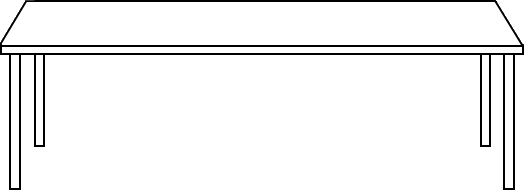
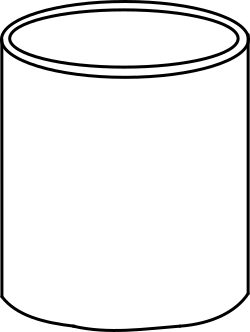

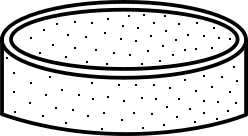
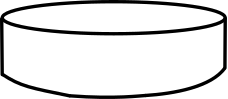

Measure the internal diameter of the cylindrical mould.
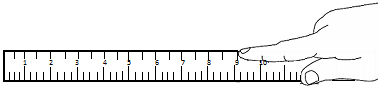
Diameter of the cylindrical mould is = 7.3 cm.
Diameter of the cylindrical mould is = 9.83 cm.
Diameter of the cylindrical mould is = 10 cm.
✔
✘
✔
✘
✔
✘
Fill the mould with sample soil and compact it to a density which may be representative of the field conditions.
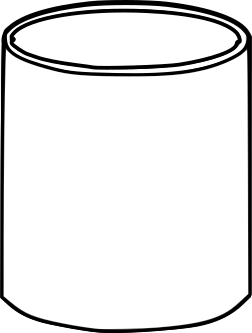




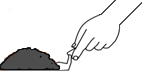
Trim the soil which is poured into the mould to the dimensions similar to that of the mould.


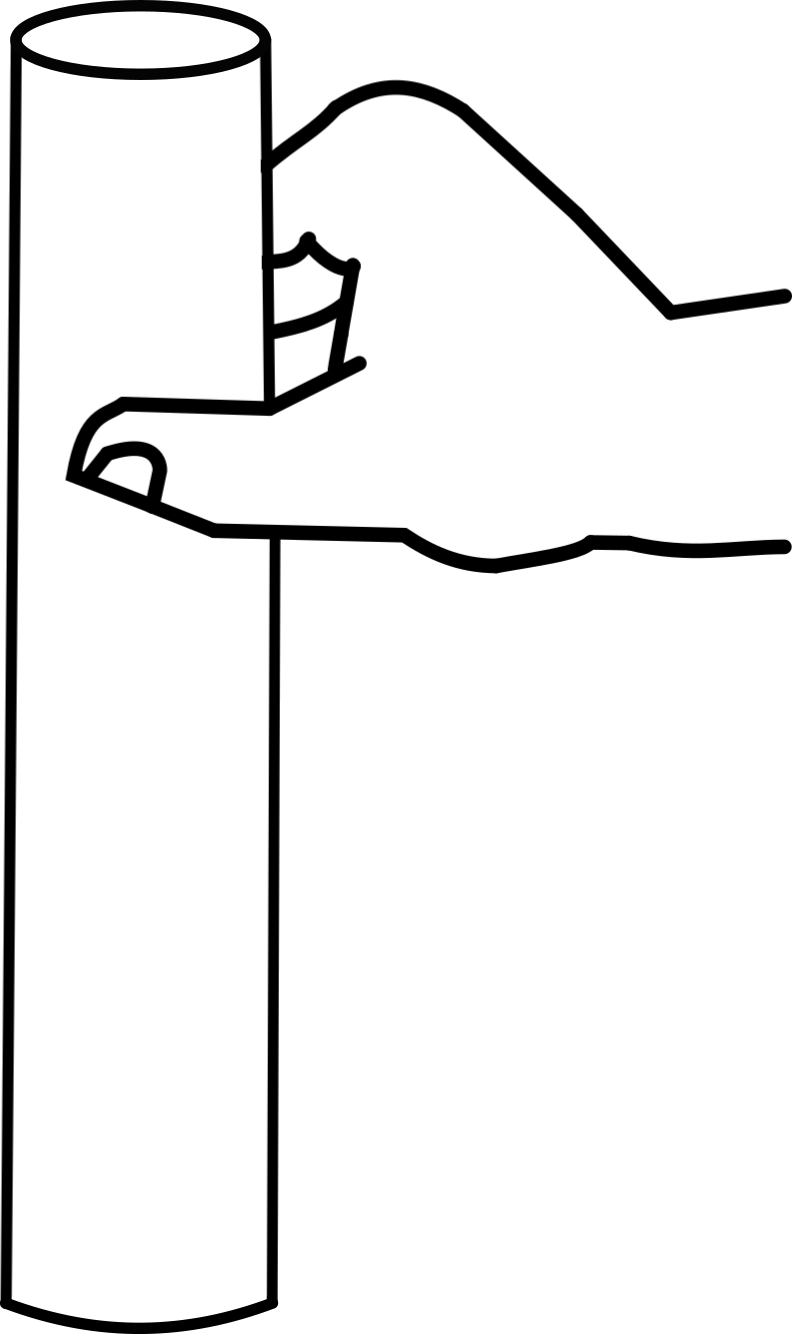
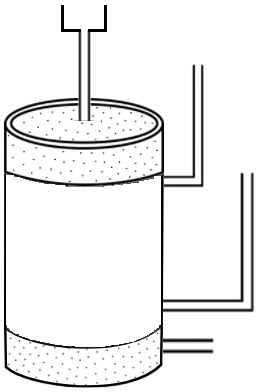
Attach the mould with two filter discs at the top and the bottom.


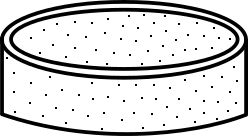
Filter Disks
(Highly Permeable)

Inlet

Manometers

Outlet
The inlet of the instrument is connected with a constant head water reservoir and water is released into the soil sample.




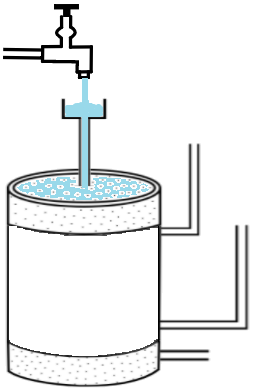
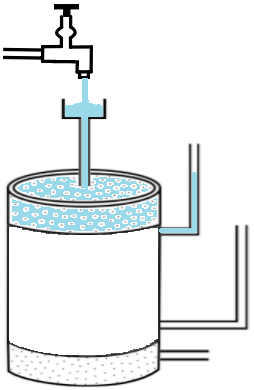
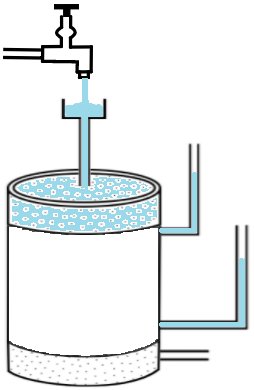
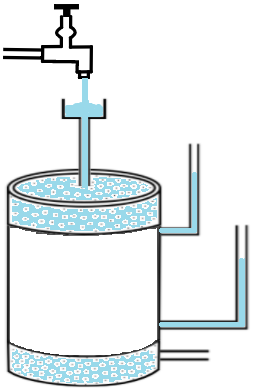
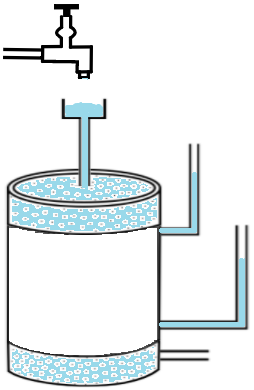

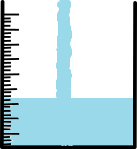
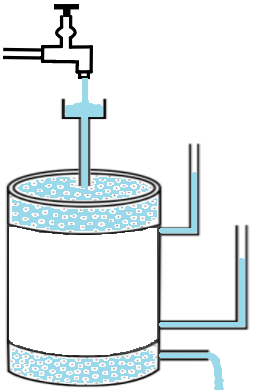

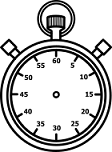

Fixed Time Interval = 60 sec
Fixed Time Interval = 132 sec
Fixed Time Interval = 300 sec
Observations:
✔
✘
✔
✘
✔
✘
✔
✘
✔
✘
✔
✘
Result:
Transmissivity of a highly permeable soil in an aquifer = 0.069 cm2/sec
Transmissivity of a highly permeable soil in an aquifer = 0.07 cm2/sec
Transmissivity of a highly permeable soil in an aquifer = 0.042 cm2/sec
Trial =

