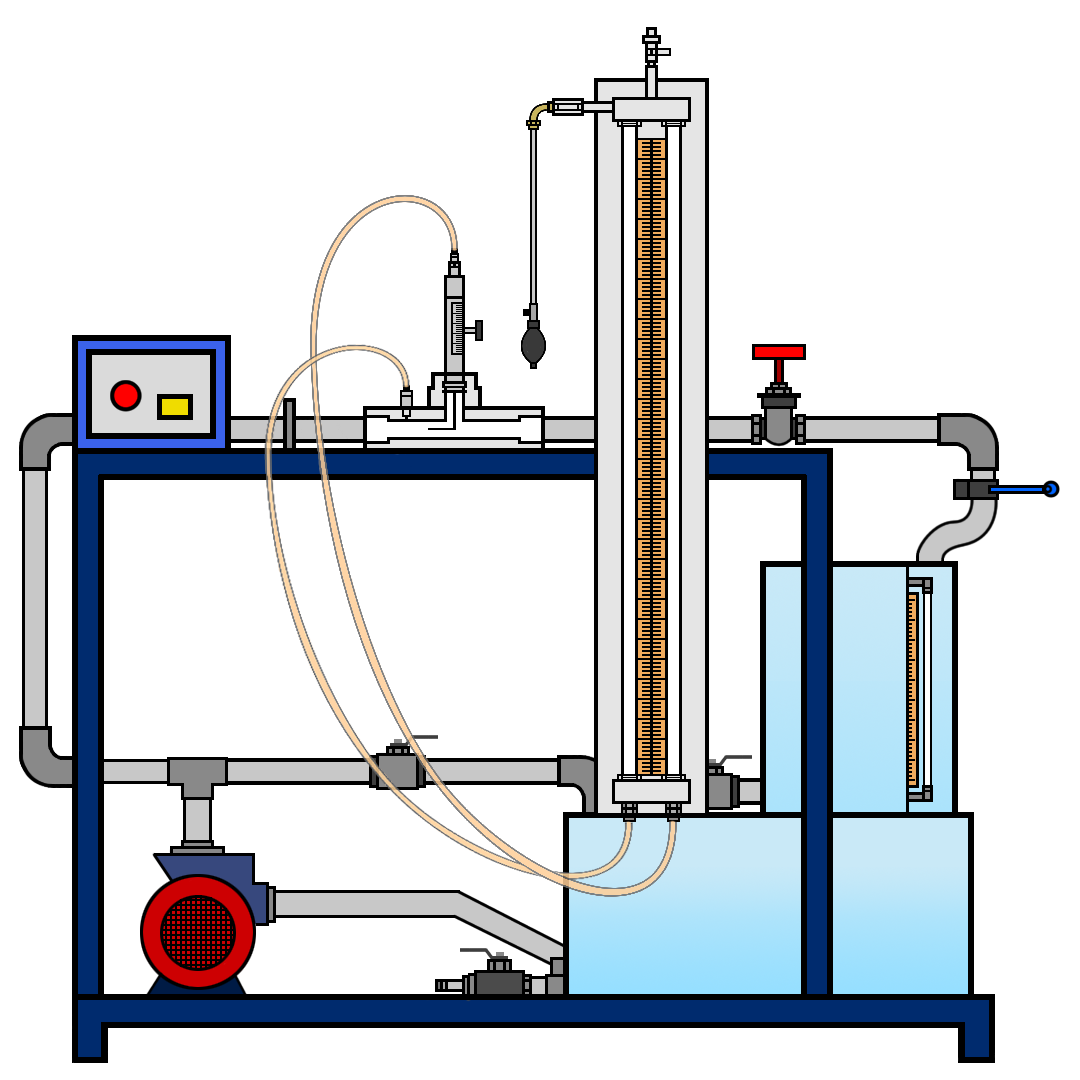
Control Panel
Switches ON/OFF the power supply to the pump. Essential for safety and operation control.
To determine the local point pressure and calculate velocity flow with the help of a Pitot tube.
A Pitot tube is a device used to measure flow velocity. It works on the principle of Bernoulli's theorem.
Where \( \Delta h \) is the difference in manometer height (\(h_1 - h_2\)).

Switches ON/OFF the power supply to the pump. Essential for safety and operation control.

Draws water from the sump tank and circulates it through the test pipe section.
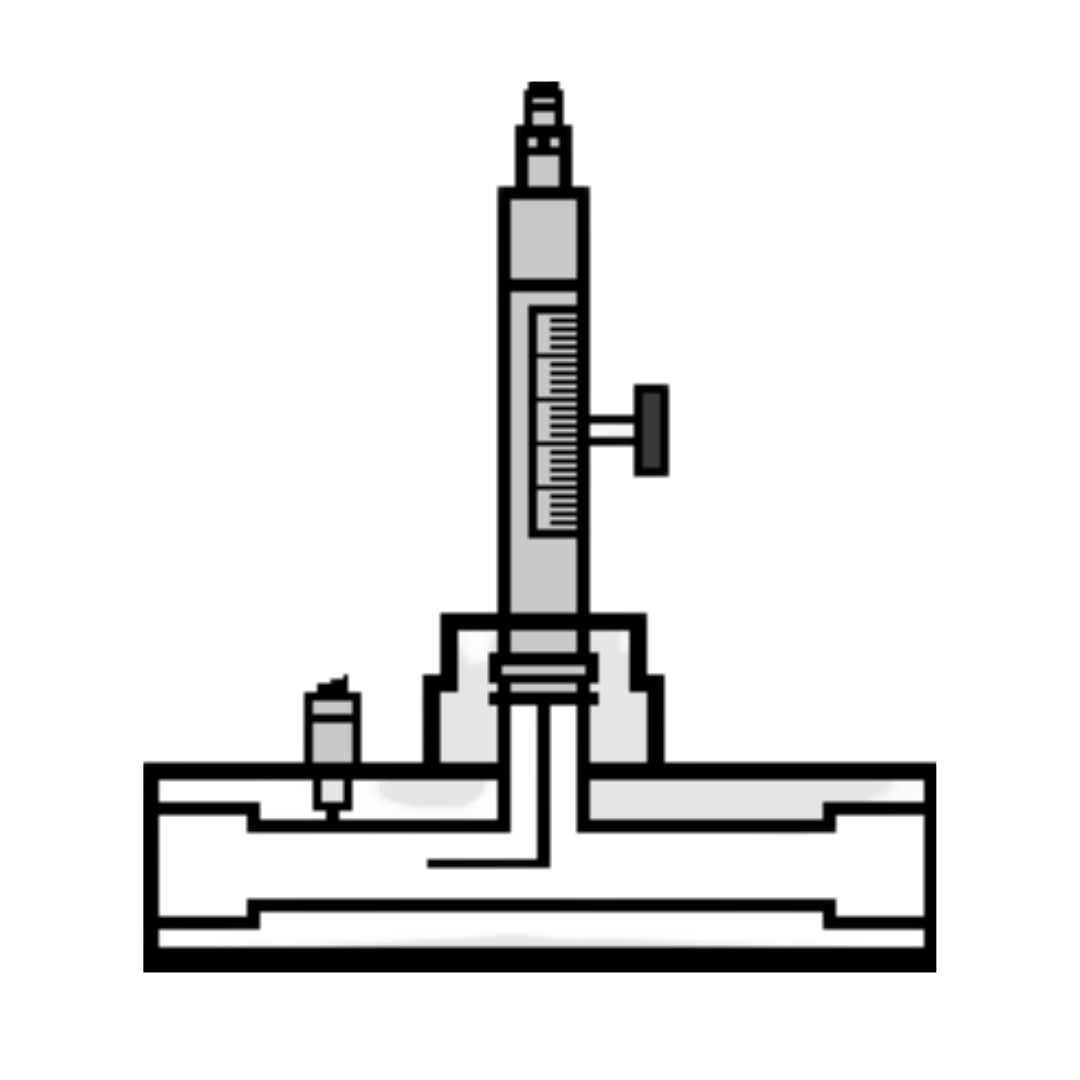
L-shaped probe used to measure stagnation pressure at a specific point in the flow.
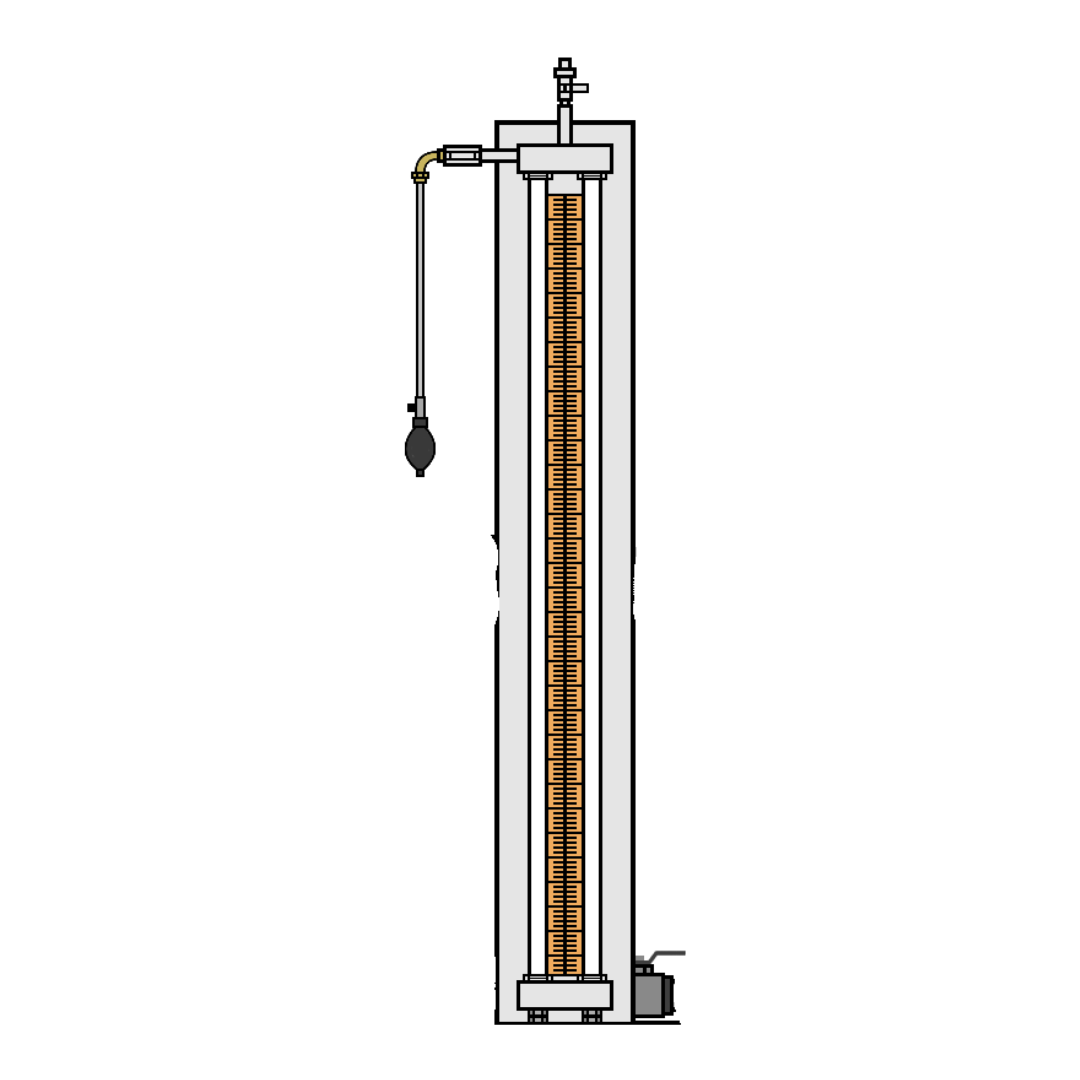
Displays the pressure difference between static and stagnation pressure via fluid columns.
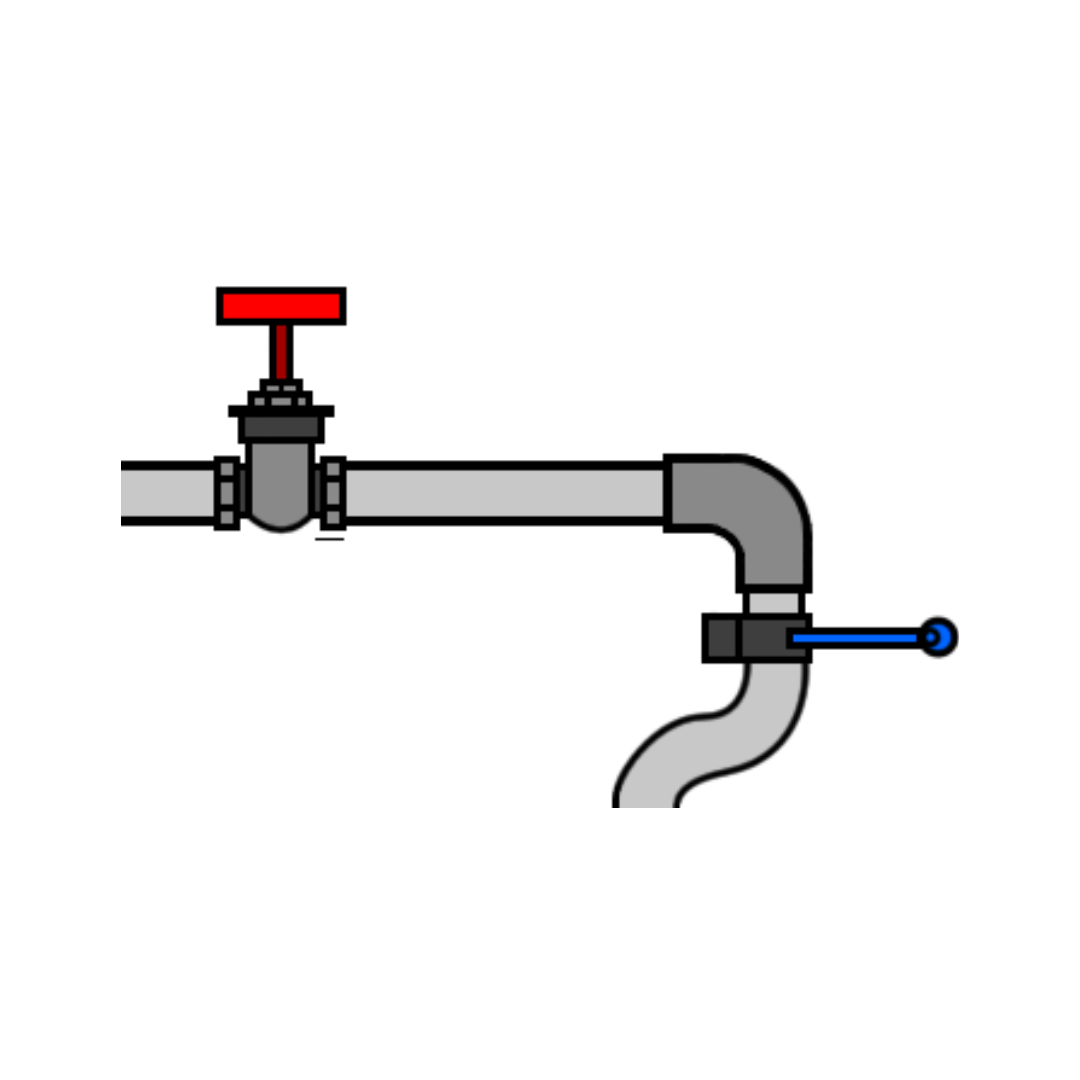
Regulates the discharge (Q) allowing for velocity variation during the experiment.
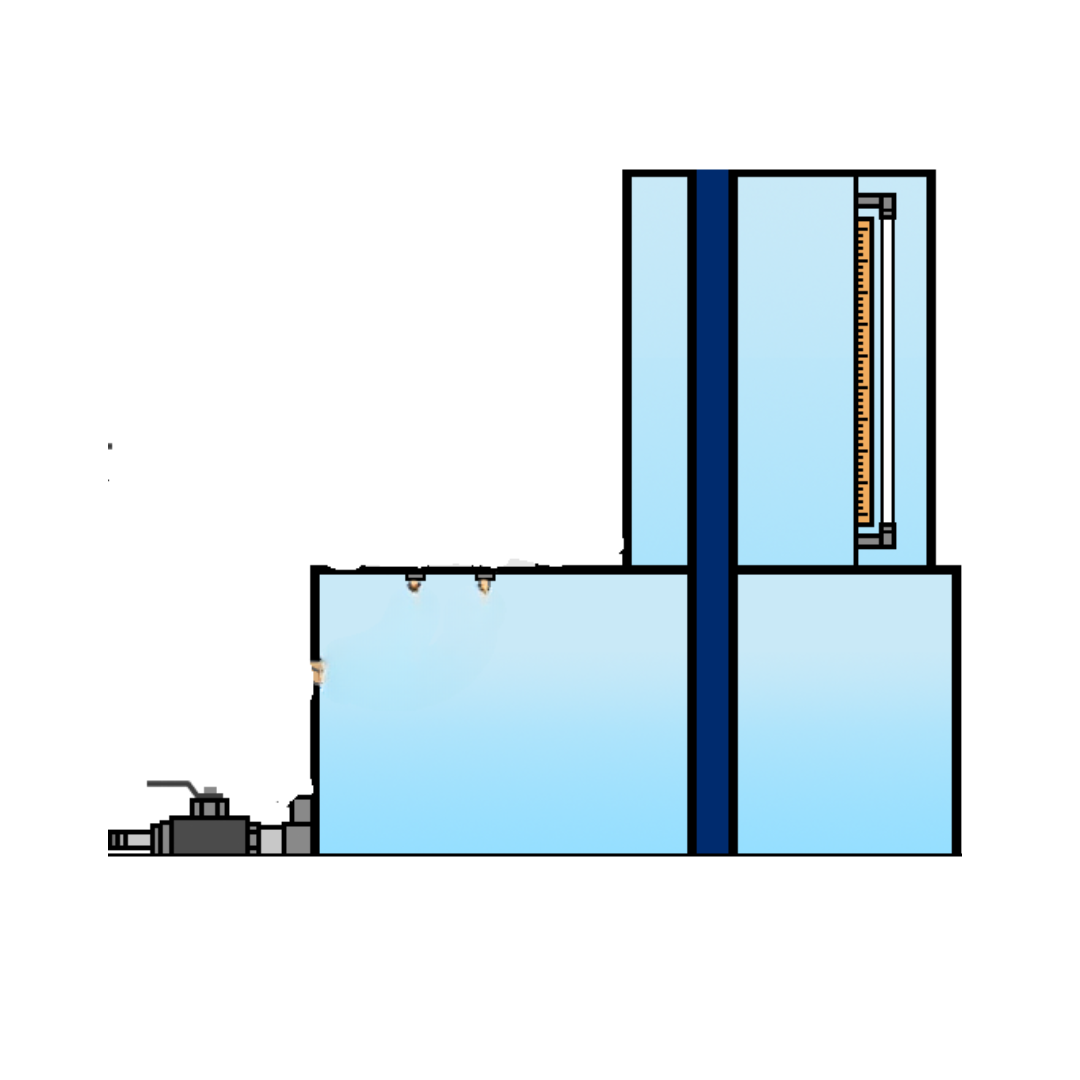
Collects water to measure actual discharge rate using the rise in water level over time.
| Trial No. | Flow Rate (%) | Head Diff (Δh in m) | Velocity (m/s) |
|---|