
Overview
Blood pressure is the force exerted by circulating blood against the walls of arteries. It is measured using an instrument called a sphygmomanometer. There are different types of sphygmomanometers used in clinical practice.
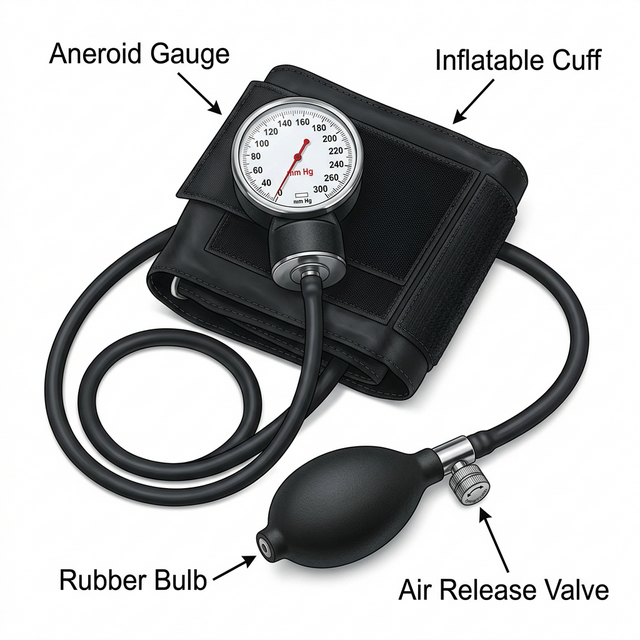
1. Aneroid Sphygmomanometer
An aneroid sphygmomanometer is a manual device used to measure blood pressure.
It consists of:
- Inflatable cuff
- Pressure gauge (dial)
- Rubber bulb used to inflate the cuff
- Air release valve
The pressure inside the cuff is displayed on the dial gauge in mmHg.
It is commonly used in clinics because it is portable and does not contain mercury.
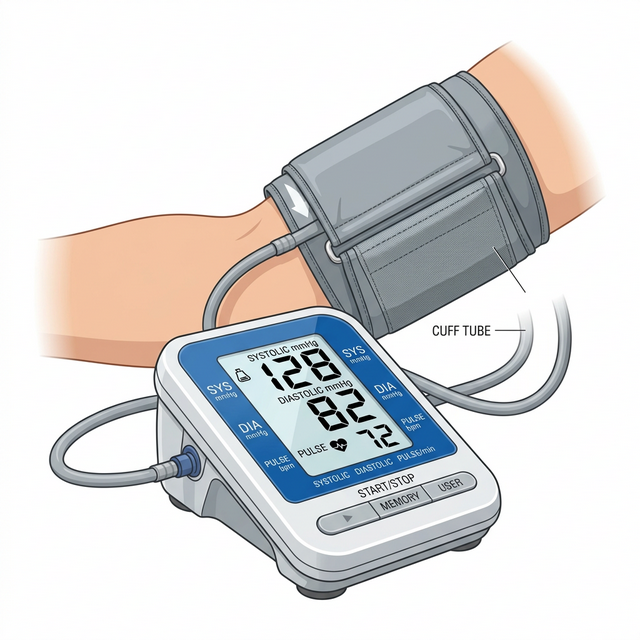
2. Digital Sphygmomanometer
A digital sphygmomanometer automatically measures blood pressure using electronic sensors.
- The cuff inflates automatically.
- Results are displayed on a digital screen.
It shows:
- Systolic pressure
- Diastolic pressure
- Pulse rate
It is widely used for home monitoring because it is easy to operate.
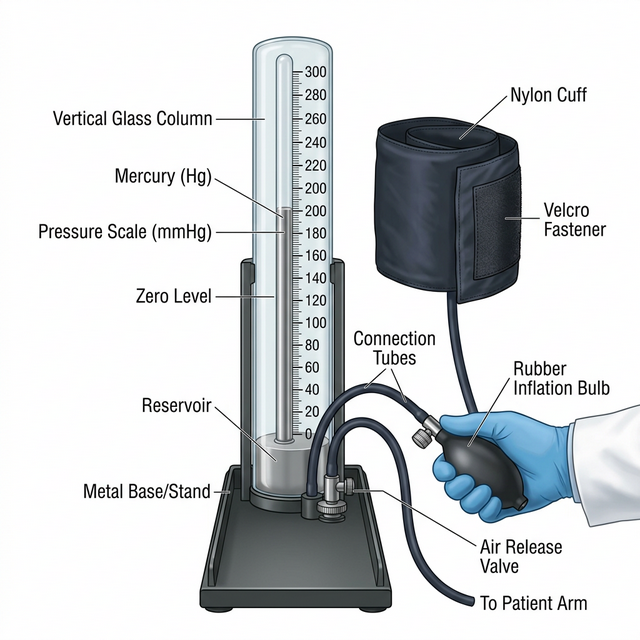
3. Mercury Sphygmomanometer
A mercury sphygmomanometer is considered the gold standard for blood pressure measurement.
- It uses a vertical glass column filled with mercury.
- The pressure from the cuff pushes mercury upward in the column.
- The height of mercury indicates blood pressure in mmHg.
Due to mercury toxicity concerns, its use has decreased in modern healthcare settings.