🎯 Objective
To visualize, simulate, and analyze blood flow dynamics in human arteries using a simplified mathematical
model. This experiment aims to study the effect of arterial radius, blood pressure, viscosity, and vessel
length on blood flow rate and velocity.
📖 Introduction
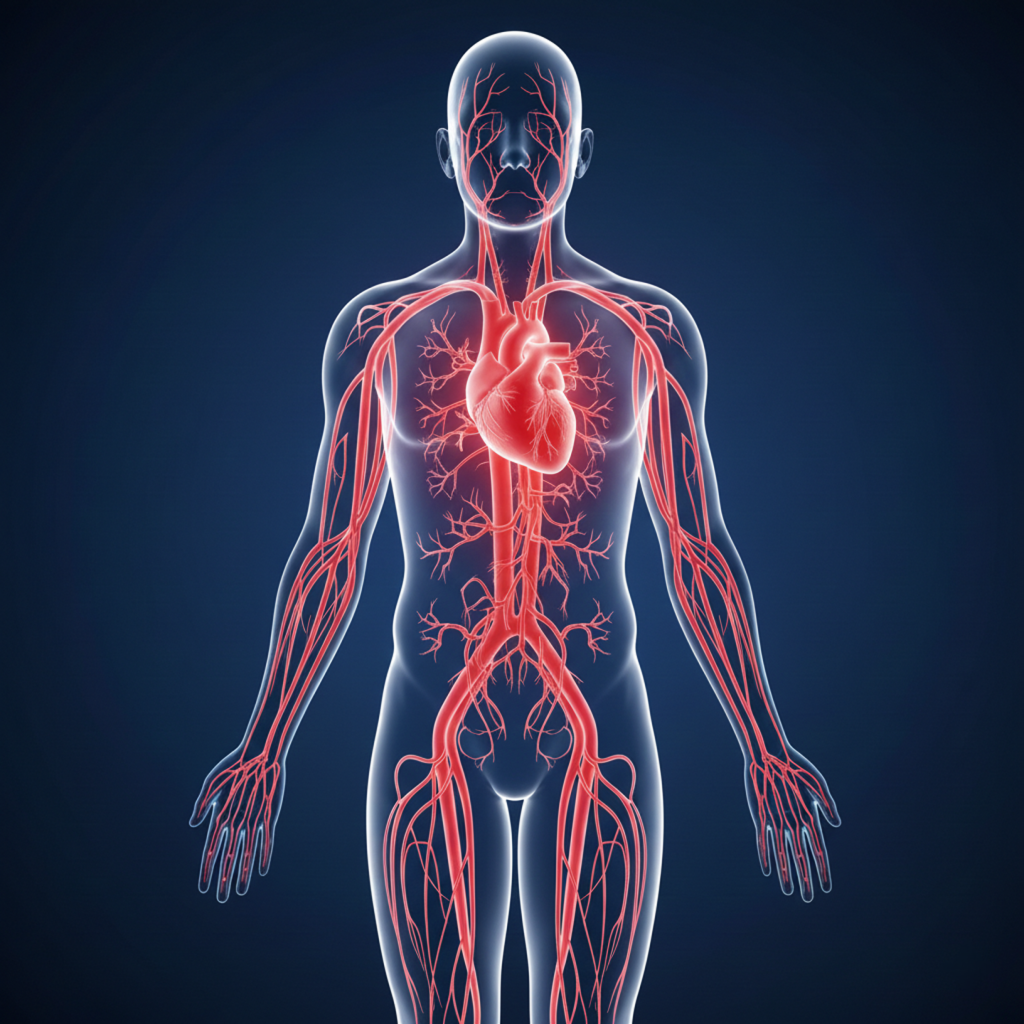
The human circulatory system plays a vital role in transporting oxygen, nutrients, hormones, and waste
products throughout the body. The heart acts as a pump that drives blood through a complex network of
arteries, veins, and capillaries.
🧪 Theory: Poiseuille’s Law
In small and medium-sized arteries, blood flow can be approximated as laminar flow. Under such
conditions, the flow rate is described by:
- Q: Volume flow rate
- r: Radius of the artery
- ΔP: Pressure Gradient
- η: Dynamic viscosity
- L: Length of the artery
🛠️ Procedure
- Click the body anatomy to start.
- Use the Sidebar Controls to change conditions (Normal to Blocked).
- Adjust Radius and Pressure sliders.
- Observe how blood cells flow through the artery.